

The Phillies Saved Their Season in Extra Innings — Now the Real Pitching Gamble Begins
Last updated: October 1, 2026
For most of Wednesday afternoon in Atlanta, the Philadelphia Phillies appeared to be moving toward an ending that would have felt painfully familiar. Their offense was quiet, opportunities were disappearing, and a seventh-inning defensive mistake by Bryce Harper helped turn a close elimination game into a 3-1 Braves lead. Philadelphia was six outs from going home.
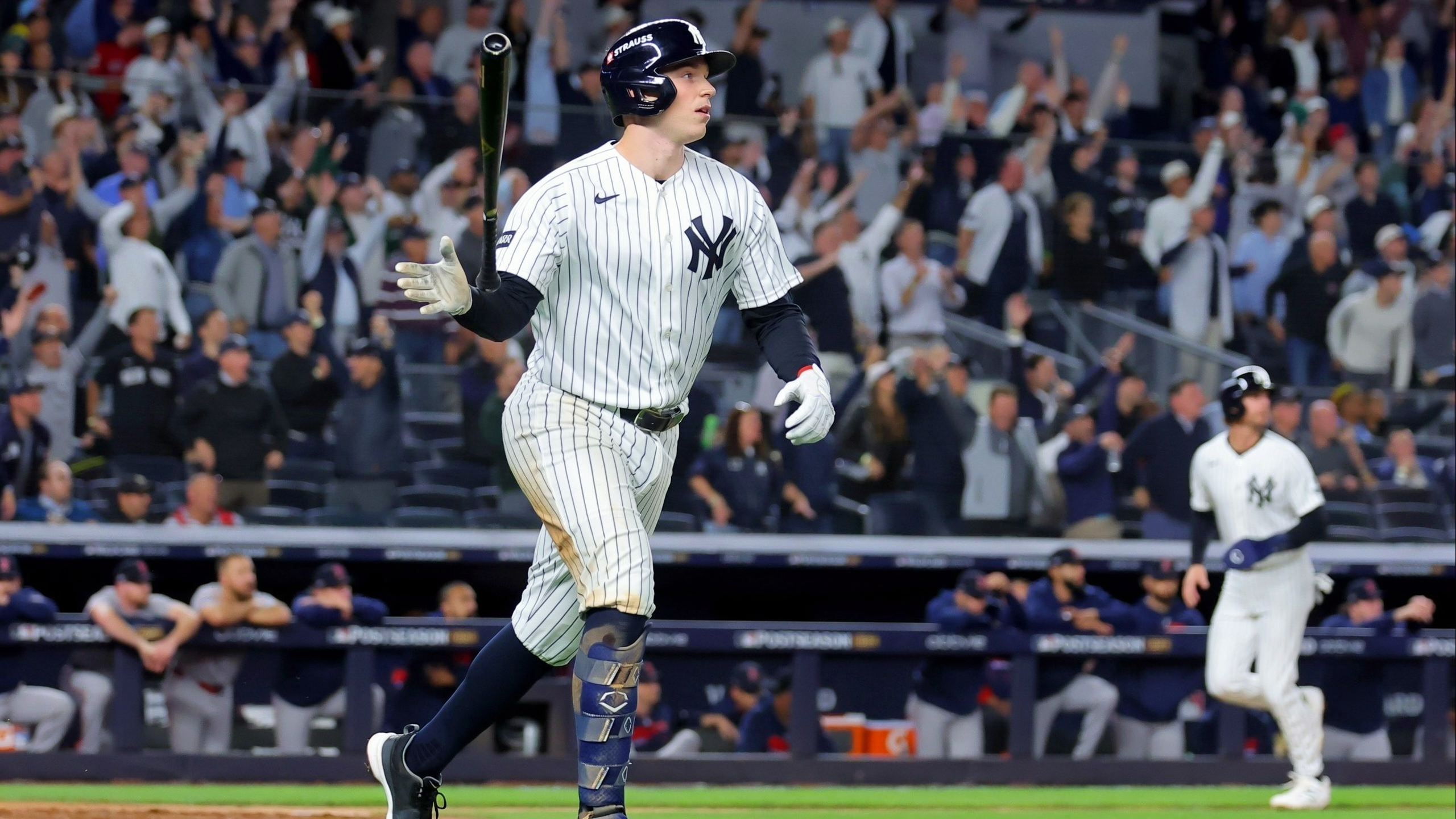
Then the shape of the entire postseason changed within a matter of minutes. Kyle Schwarber launched a game-changing home run to open the eighth inning. Harper followed with another, immediately erasing much of the sting from his defensive mistake. Alec Bohm completed the comeback two innings later with a two-out solo homer in the 10th, and Andrew Painter survived the bottom half to preserve a 4-3 victory that forced a deciding Game 3 of the National League Wild Card Series.
That would already have been enough drama for one postseason story. Instead, Philadelphia woke up Thursday with another enormous decision to make. Zack Wheeler, the pitcher most Phillies fans would instinctively want on the mound with a season at stake, had started the regular-season finale on Sunday and thrown 97 pitches. Using him to start Game 3 would therefore mean bringing him back on short rest. Aaron Nola, meanwhile, was on normal rest and had spent the second half rebuilding a season that looked deeply troubled by the end of June. The Phillies ultimately chose Nola to start, with Wheeler expected to remain available behind him as part of what interim manager Don Mattingly has described as an all-hands-on-deck approach.
So the biggest question after Philadelphia’s unforgettable Game 2 comeback is no longer simply whether Wheeler should start. It is how the Phillies should use all 27 outs of a winner-take-all game when Nola, Wheeler, Jesús Luzardo, potentially Jhoan Duran and even Painter could all factor into the plan. Game 2 saved the season. Game 3 will test whether Philadelphia can turn that escape into something larger.
JUMP TO
Quick Answer
How Philadelphia Saved Its Season
Harper’s Mistake and Redemption
Andrew Painter’s Huge Relief Appearance
Why Aaron Nola Gets Game 3
Where Zack Wheeler Fits
Atlanta’s Pitching Plan
The Lineup Questions
Phillies-Braves Postseason History
What to Watch in Game 3
Quick Answer: What Changed After the Phillies’ Extra-Inning Win?
QUICK ANSWER Philadelphia’s 4-3, 10-inning victory did more than extend the Wild Card Series. It preserved enough pitching flexibility to give the Phillies multiple paths through Game 3. Aaron Nola will start on regular rest, while Zack Wheeler is expected to be available behind him after throwing 97 pitches in Sunday’s regular-season finale. Jesús Luzardo has also said he can pitch, and Andrew Painter indicated that he would be willing to work again after throwing three scoreless relief innings Wednesday. Jhoan Duran’s availability is less certain after he threw 27 pitches across two innings in Game 1 and was unavailable in Game 2.
The practical consequence is important. Philadelphia does not need Nola to behave like a traditional seven-inning starter simply because his name appears beside the word “starter.” In a winner-take-all game, Mattingly can treat Nola as the first part of a larger pitching sequence. If Nola is sharp, he can stay. If Atlanta starts producing hard contact or turning the lineup over with men on base, Wheeler can enter earlier than he would in a normal game. Luzardo offers a left-handed option. Painter, despite his workload from Game 2, has made it clear that he considers himself available if needed.
That makes the debate over “Nola or Wheeler” less binary than it first appeared. The Phillies chose Nola to begin the game because he is the most rested established starter. They did not choose Nola instead of Wheeler in the broader sense. Their ideal version of Game 3 may involve both.
STORY AT A GLANCE
Series: Phillies vs. Braves, NL Wild Card Series tied 1-1.
Game 2: Philadelphia 4, Atlanta 3 in 10 innings.
Game 2 hero: Alec Bohm hit the go-ahead home run in the 10th.
Comeback: Kyle Schwarber and Bryce Harper hit back-to-back homers in the eighth to erase a 3-1 deficit.
Pitching hero: Andrew Painter worked the final three innings without allowing a run.
Game 3 starter: Aaron Nola for Philadelphia.
Wheeler: Expected to be available in relief on short rest.
Atlanta: Ray Kerr is expected to open, with Grant Holmes handling bulk innings.
Game 3: Thursday, October 1, 8:00 p.m. ET at Truist Park.
Next round: The winner advances to face the Los Angeles Dodgers in the NLDS.
How the Phillies Went From Six Outs From Elimination to a Deciding Game
The remarkable thing about Philadelphia’s Game 2 comeback is how little the first seven innings suggested what was coming. Tyler Mahle controlled the Phillies for Atlanta, allowing only one run across seven innings. Cristopher Sánchez kept Philadelphia close, but the Phillies could not find the sustained offensive pressure that elimination games usually demand. Atlanta carried a 3-1 advantage into the eighth, and because Philadelphia had already lost Game 1, another Braves win would have ended the season immediately.
Sánchez gave the Phillies 6 2/3 innings, an enormously valuable contribution considering what had happened to Philadelphia’s bullpen a day earlier. Game 1 had exposed how aggressively the Phillies might have to use Jhoan Duran because they did not trust the middle of the bullpen to navigate postseason innings. Duran was asked to shoulder a heavy workload, throwing 27 pitches across two innings, and was unavailable the next day. That made every out Sánchez could provide in Game 2 unusually valuable.
Yet even Sánchez’s work appeared destined to become a footnote after Atlanta’s seventh inning. Harper misplayed a ball in right field, and the Braves capitalized. Drake Baldwin’s double helped Atlanta stretch its advantage, and the Phillies suddenly faced the kind of moment that can become the lasting image of a postseason exit: a superstar standing alone in the outfield while a hostile crowd celebrates and the season slips away.
Philadelphia’s response came immediately enough to change the emotional meaning of the mistake. Schwarber led off the eighth and attacked Dylan Lee’s slider, sending it a projected 447 feet. Ronald Acuña Jr. did not bother turning to watch it leave. Harper stepped in next and drove another slider out to right field. In the space of two batters, a two-run deficit had disappeared.
WHAT CHANGED Philadelphia did not gradually chip away at Atlanta’s lead. Schwarber and Harper erased it in consecutive plate appearances. That matters because the Braves entered the late innings expecting their bullpen to protect a lead, while the Phillies entered them hoping to survive long enough for one swing to matter. Two swings completely reversed those expectations.
The game remained tied through the ninth, which brought another unusual challenge. Postseason extra innings do not begin with the automatic runner used during the regular season, so Philadelphia had to manufacture a conventional extra-inning run. Bohm did more than that. With two outs in the top of the 10th, he turned on a 99.4 mph Didier Fuentes four-seam fastball and drove it 357 feet to right field. It was an opposite-field home run, and it made Bohm only the fourth player in Phillies history to hit a go-ahead homer in extra innings of a postseason game, joining George Vukovich, Lenny Dykstra and J.T. Realmuto.
The Phillies still needed three outs, and those outs belonged to a 23-year-old rookie starter making his postseason debut in a role that was largely unfamiliar to him.
Bryce Harper Turned a Potentially Defining Mistake Into Part of the Comeback
Postseason baseball is unusually good at attaching enormous meaning to a few seconds. A ball misread in the outfield can become the image everyone remembers all winter. A home run one inning later can prevent that image from carrying the same weight.
That was the emotional arc of Harper’s Game 2. His seventh-inning misplay helped Atlanta produce the lead that appeared likely to end Philadelphia’s season. Harper did not need to explain afterward how badly he wanted a chance to respond. When Schwarber opened the eighth with his long home run, Harper suddenly had exactly that opportunity. His own homer tied the game before Atlanta recorded an out.
The sequence mattered beyond one player’s redemption. Schwarber and Harper are the two hitters around whom much of Philadelphia’s offensive identity is built. When the Phillies are at their most dangerous, those two can change a game before an opponent has time to adjust. Game 2 provided an exaggerated version of that reality: Atlanta had a two-run lead entering the inning and no lead two batters later.
For Atlanta, there is also a tactical warning embedded in those two swings. The Braves cannot assume that surviving the first five or six innings against Philadelphia’s lineup means the major threats have been neutralized. Schwarber and Harper can turn a narrow late lead into a tie almost instantly, which places even more pressure on Atlanta’s relief choices in Game 3.
Alec Bohm’s Home Run Was Bigger Than a Single Extra-Inning Swing
Bohm’s 10th-inning home run completed the comeback, but his night had its own redemption element. Earlier, he had fielded a bunt near the mound and attempted to get the lead runner at second rather than taking the safer out at first. It did not work. The Phillies were creating problems for themselves at a moment when their season allowed almost no margin for mistakes.
That context makes the homer more important. It was not simply a star player delivering after playing a clean game. Game 2 repeatedly forced Philadelphia’s best players to recover from their own errors. Harper did it. Bohm did it. The Phillies won despite creating some of the danger they later had to escape.
There is an obvious temptation after a postseason game like this to treat resilience as something mystical. Usually there is a simpler baseball explanation. Philadelphia had enough power to erase mistakes. It had Sánchez pitching deeply enough to keep the score manageable. It had Painter available to cover three innings. It had Bohm capable of driving a 99 mph fastball the other way. Those tangible advantages created the comeback. The emotional resilience mattered because the roster still had the physical tools to act on it.
POSTSEASON HISTORY Bohm became the fourth Phillie to hit a go-ahead home run in extra innings of a postseason game. The previous three were George Vukovich in the 1981 NLDS, Lenny Dykstra in the 1993 NLCS and J.T. Realmuto in Game 1 of the 2022 World Series.
Andrew Painter May Have Changed More Than Game 2
The most important development for Philadelphia beyond the three home runs may have been Painter’s performance. He entered in relief despite spending the regular season as a starter, and the Phillies asked him to cover the final three innings of an elimination game. He did not allow a run.
There was no gentle introduction. Painter was working with the game tied and the season effectively attached to every pitch. His first career postseason appearance became a multi-inning high-leverage relief assignment, exactly the sort of role that can expose a young pitcher’s inability to control adrenaline or adapt to an unfamiliar routine. Painter instead gave Philadelphia nine critical outs.
The final sequence made the performance even more memorable. With two runners on and two outs in the bottom of the 10th, Painter thought he had thrown strike three to Dominic Smith. The pitch was initially called a ball. Painter and Realmuto immediately signaled for an automated ball-strike challenge, and the call was overturned. The Phillies’ season remained alive on a game-ending strikeout confirmed through the ABS system. It was the first postseason game to end on an ABS challenge since the system’s introduction.
Painter’s outing also simplified Thursday’s pitching discussion. Had Philadelphia burned through four or five relievers after Sánchez departed, the Phillies might have reached Game 3 with a severely compromised bullpen. Painter instead absorbed almost everything after Sánchez. Sánchez and Painter recorded 29 of Philadelphia’s 30 outs, with Alex McFarlane accounting for the other one.
That is a major reason the Phillies can now discuss Game 3 as an all-hands-on-deck puzzle rather than a survival exercise with half the staff unavailable. Painter’s three innings were not merely heroic in the moment. They preserved optionality for the next night.
WHY IT MATTERS In a short playoff series, innings saved today can become pitching options tomorrow. Painter covering three innings meant Philadelphia did not have to expose the rest of its bullpen repeatedly in Game 2, leaving Mattingly with more possible combinations for Game 3.
Why Aaron Nola Is Starting Game 3 Instead of Zack Wheeler
The simplest explanation is rest. Nola is available on a normal schedule. Wheeler is not.
Wheeler started Sunday’s regular-season finale against Tampa Bay because Philadelphia still had to secure its postseason place. He threw 97 pitches across six innings in the Phillies’ 7-3 victory. That performance helped send Philadelphia to the postseason for a fifth consecutive year, but it also meant the club could not simply line Wheeler up for the Wild Card Series on normal rest.
Nola’s recent workload is complicated in a different way. Philadelphia used him on short rest against Tampa Bay on Saturday as it tried to clinch before the final day. Nola lasted only one inning and allowed three runs, but by Thursday he will have had four days between appearances. He also threw a between-starts bullpen session in Atlanta and told reporters he felt good.
There is also a performance argument. Nola’s season was not uniformly strong, which is why some Phillies fans may instinctively recoil at the thought of him starting an elimination game while Wheeler waits. But Nola’s year contained two very different chapters. Through June 29, he had a 6.04 ERA across 17 starts. Over his final 15 starts after that point, his ERA was 3.12. That is not a minor correction. It is the difference between a pitcher who looked like a serious postseason liability and one who had spent months pitching much closer to the level Philadelphia expected.
Against Atlanta specifically, Nola posted a 4.50 ERA in three starts this season. His longer history against the Braves is considerably deeper: a 3.71 ERA across 41 career starts entering Game 3. He has seen this lineup, this organization and this ballpark environment repeatedly. Familiarity alone does not guarantee success, especially against hitters who are equally familiar with him, but this is not a pitcher entering an unknown matchup.
Most importantly, starting Nola protects Wheeler from being forced into a rigid workload. If Wheeler started, the Phillies would have to decide before the game how many pitches they were comfortable asking from him on three days’ rest. Using him later allows the game itself to determine his role.
Nola Does Not Need to Pitch Seven Innings for This Plan to Work
The normal-season expectation attached to a starting pitcher can be misleading in a winner-take-all postseason game. Nola’s job is not necessarily to carry Philadelphia through seven innings. His job is to give Mattingly enough effective outs to reach the next favorable pitching decision.
If Nola gets through Atlanta’s lineup twice with limited damage, the Phillies can consider that a major success and transition to Wheeler before the Braves get a third extended look. If Nola dominates, there is no reason to remove him merely because a pregame plan called for Wheeler. If he struggles immediately, there is no reason to protect the symbolism of a “starter” either. This is precisely the type of game in which role labels become less important than matchups and outs.
Zack Wheeler Is Still Central to Game 3 — Just Not From the First Pitch
Philadelphia’s decision to start Nola should not be interpreted as a lack of trust in Wheeler. It is almost the opposite. Wheeler may be the most valuable flexible arm available because he is capable of entering whenever the game reaches its highest-leverage pitching moment.
Mattingly repeatedly emphasized that Game 3 would be an all-hands-on-deck situation. MLB’s own Game 3 preview indicated that Wheeler would be expected to enter in relief if he did not start. That gives Philadelphia the possibility of using Nola for the first portion of the game and Wheeler as a multi-inning bridge through the middle or late innings.
The timing could matter enormously. Suppose Nola works four efficient innings and Atlanta’s order turns over for a third time with Acuña, Matt Olson and the heart of the lineup approaching. Wheeler could enter there rather than waiting for a traditional sixth- or seventh-inning relief checkpoint. Conversely, if Nola carries a lead into the sixth, Philadelphia may be able to save Wheeler for the final stretch and reduce the number of outs required from a bullpen that has not inspired complete trust.
Using Wheeler in relief also makes his workload easier to adjust. If he looks sharp and physically comfortable, he can continue. If three days’ rest begins to show in his velocity, command or recovery between innings, Mattingly can move to another option without having designed the entire game around Wheeler providing a conventional start.
PITCHING DECISION The Phillies are not really choosing between Nola and Wheeler. They are choosing the order in which to deploy them. Starting Nola on regular rest preserves the possibility of using Wheeler exactly when the game demands him rather than asking Wheeler to carry a predetermined starter’s workload on short rest.
The Phillies’ Bullpen Problem Has Turned Game 3 Into a Starting-Pitcher Relay
One of the clearest themes of this Wild Card Series has been Philadelphia’s effort to avoid exposing the weakest part of its pitching staff for too many outs. Game 1 provided the warning. The Phillies tried to stretch Duran because the alternatives were uncomfortable, and Atlanta eventually broke through. Game 2 then produced the opposite formula: Sánchez and Painter covered nearly the entire game themselves.
That pattern points toward another starter-heavy plan in Game 3. Nola gets the first assignment. Wheeler can follow. Luzardo, who started Game 1 after returning from a shoulder problem, told reporters that he would be available. Painter said the same despite throwing three innings Wednesday. Sánchez is the obvious exception because he just threw 116 pitches in Game 2.
Duran is the uncertainty. His Game 1 workload left him unavailable Wednesday, and his status for Game 3 was still being evaluated. If Duran is ready, the ninth inning becomes considerably easier to map. If he is not, Philadelphia may need to let Wheeler, Nola or another starter absorb innings that would normally belong to a conventional late-game reliever.
The Best-Case Pitching Script
Philadelphia’s cleanest path would be for Nola to give the club five or six strong innings while the offense establishes a lead. That would reduce the number of outs required from Wheeler and preserve the possibility of using Wheeler only once Atlanta’s order reaches its most dangerous stretch. If Duran is available, Mattingly could then save him for the final inning rather than trying to stretch him beyond a normal closer’s workload.
The More Realistic Postseason Script
Winner-take-all games rarely unfold that cleanly. If Nola allows traffic early but avoids a big inning, the Phillies may still be tempted to push him because of Wheeler’s rest situation. The danger is waiting one batter too long. Philadelphia’s pitching depth exists precisely so Mattingly does not need to treat Nola’s start as a referendum on the veteran’s toughness. Once the matchup turns unfavorable, Wheeler can become the next pitcher rather than the emergency pitcher.
Atlanta Has Its Own Pitching Puzzle: Ray Kerr to Open, Grant Holmes for Bulk Innings
The Braves are not entering Game 3 with a conventional starter-and-bullpen structure either. Atlanta plans to use left-hander Ray Kerr as an opener, with Grant Holmes expected to handle the bulk of the innings. That creates an immediate matchup wrinkle because Schwarber and Harper are Philadelphia’s most dangerous left-handed power bats.
Kerr had been extremely effective against left-handed hitters entering Game 3. MLB’s preview noted that lefties were 4-for-23 against him with only one extra-base hit, while Kerr had posted a 1.47 ERA over 18 1/3 innings since making his season debut in August. The Braves’ intention is therefore understandable: use a left-handed specialist-like opener to confront the most dangerous section of Philadelphia’s order before turning the game over to Holmes.
There is a strategic tradeoff. Using Kerr to shape the first inning may encourage Philadelphia to alter its lineup or force Atlanta to make an early pitching switch once right-handed bats arrive. In a game without tomorrow, that cost is acceptable if Kerr can neutralize Schwarber and Harper the first time through. But Game 2 demonstrated how little room the Braves have to relax when those two hitters remain within one swing of changing the score.
Atlanta’s Bullpen Was Supposed to Be the Safer Unit — Game 2 Changed That Assumption
Before the series, Philadelphia’s bullpen depth looked like the more obvious vulnerability. Atlanta’s relief group had been one of its strengths. Through two games, however, the clean division between strong Braves bullpen and questionable Phillies bullpen has become much harder to maintain.
Dylan Lee surrendered the back-to-back home runs to Schwarber and Harper. Fuentes, one of Atlanta’s most dependable relievers during the season, allowed Bohm’s go-ahead homer in the 10th. Raisel Iglesias, Lee and Fuentes have all worked in each of the first two games, although Atlanta expects them to remain available. Robert Suarez had not yet been used entering Game 3 after missing three months with an elbow problem.
That creates a fascinating reversal. Philadelphia has reached the deciding game with its bullpen hierarchy uncertain but with a collection of starters willing to relieve. Atlanta has reached it with a bullpen that remains talented but has already been hit in the highest-leverage moments of the series. Neither manager can operate by reputation alone now.
Edmundo Sosa’s Status Could Quietly Change Philadelphia’s Lineup
While the pitching decision dominates attention, Philadelphia also entered Thursday with a positional concern. Edmundo Sosa left Game 2 with a right-leg issue after reaching base in the ninth inning. His status remained uncertain heading into the series finale.
If Sosa cannot play, the Phillies can move Harper back to first base and use Derek Hill in right field, which was one lineup structure identified by MLB ahead of Game 3. That would have defensive consequences as well as offensive ones. Harper’s Game 2 misplay came in right field, but his ability to play there has allowed Philadelphia to create different combinations elsewhere on the diamond.
Luis Arraez is already unavailable for the Wild Card roster after a significant ankle sprain, making Sosa’s status more important than it might appear in isolation. In a three-game series, one unavailable position player can quickly change both the starting lineup and the bench options available later against changing pitchers.
Philadelphia’s Offense Does Not Need to Become Consistent — It Needs to Remain Dangerous
The Phillies have not spent this series overwhelming Atlanta with continuous rallies. Their Game 2 offense was quiet for long stretches. Mahle gave the Braves seven innings of one-run baseball, and Philadelphia repeatedly looked one swing short of changing the game until Schwarber finally supplied exactly that swing.
That is an important distinction entering Game 3. Philadelphia does not necessarily need 12 hits to create enough offense. The lineup contains enough high-impact bats that a small number of mistakes can become multiple runs. Schwarber’s home run was not a rally in the traditional sense. Harper did not move him around the bases. The two hitters simply erased a two-run deficit before the Braves recorded an out.
Bohm adds another layer because he has been one of Philadelphia’s productive hitters in the series, going 3-for-8 with a double and a home run through the first two games. Realmuto, after an uneven offensive season, entered Game 3 with two hits and two RBIs in the series. The Phillies do not need every hitter to peak simultaneously if their core threats continue to generate damage.
OFFENSIVE REALITY Philadelphia’s lineup has not consistently controlled the series, but Game 2 demonstrated why Atlanta cannot treat a narrow lead as safe. Schwarber, Harper and Bohm produced three home runs over the final three offensive innings, turning a near-elimination into a deciding game.
Ronald Acuña Jr. and the Braves Have Their Own Offensive Questions
Atlanta has created traffic and opportunities, but it has not always converted them. The Braves left 11 runners on base in Game 2, including missed chances that could have made Philadelphia’s late comeback much more difficult. A two-run lead was enough to place enormous pressure on the Phillies, but it was not enough to survive three late solo homers.
Michael Harris II had been one of Atlanta’s hottest hitters through the first two games, going 4-for-8, while Mauricio Dubón was 3-for-9. Acuña, however, entered Game 3 without a hit in six at-bats. Austin Riley’s three-run homer in Game 1 remained Atlanta’s only home run of the series through Game 2.
That does not mean Philadelphia can comfortably challenge Atlanta’s stars. It means the Phillies have so far kept enough of the Braves’ damage contained to survive. The biggest danger for Nola is allowing the traffic Atlanta produced Wednesday to become multi-run extra-base hits. In a Game 3 where Philadelphia wants to control when Wheeler enters, an early crooked number would force Mattingly to abandon that flexibility quickly.
Nola’s History Against Atlanta Makes This Start Feel Familiar — and Dangerous
Nola has faced the Braves so many times that familiarity cuts both ways. His 41 career starts against Atlanta entering Thursday are a reminder that he understands the opponent, but Atlanta’s veteran hitters have also spent years seeing his fastball, curveball and sequencing patterns. There are fewer surprises available in a divisional matchup of this age.
The encouraging postseason precedent for Philadelphia is unusually specific. Nola has twice faced Atlanta in postseason series that were tied 1-1. In Game 3 of the 2022 NLDS, he allowed one unearned run over six innings. In Game 3 of the 2023 NLDS, he allowed two runs over 5 2/3 innings. Philadelphia won both games and eventually both series.
History does not determine Thursday’s result, but it helps explain why Philadelphia is comfortable putting the first inning in Nola’s hands. He has already pitched meaningful postseason games against essentially the same rival, and he has experienced both the intensity of Truist Park and the pressure that comes with this particular matchup.
Phillies-Braves Has Become One of October’s Most Familiar National League Matchups
Philadelphia and Atlanta do not need manufactured tension. The rivalry already has postseason memory attached to it. The Phillies eliminated the Braves in the NLDS in both 2022 and 2023, turning Atlanta’s regular-season success in those years into abrupt October disappointment. The dynamic has therefore become unusual: Atlanta has often entered postseason meetings with a stronger regular-season résumé, while Philadelphia has repeatedly become the team the Braves could not get past.
This year’s Wild Card Series arrived from a different direction. Atlanta finished the regular season 94-68, while Philadelphia reached the postseason at 88-74 only after securing the final National League Wild Card spot on the last day of the schedule. Wheeler had to pitch that finale precisely because the Phillies could not afford to save him.
Game 1 appeared to reinforce Atlanta’s advantage. Chris Sale helped put the Braves in position, and Austin Riley’s three-run eighth-inning homer turned a late Phillies lead into a 5-3 Atlanta victory. Philadelphia then reached Game 2 facing elimination.
Game 2 reversed the script. This time Atlanta led late, and Philadelphia produced the decisive home runs. The series has therefore delivered two games in which the team apparently controlling the late innings failed to finish the job. That makes Game 3 difficult to reduce to a simple advantage on paper. Both teams have already demonstrated how quickly the leverage can turn.
Why Philadelphia’s Final-Week Collapse Still Matters
The Phillies entered the postseason carrying more stress than a typical Wild Card team because simply qualifying required them to survive a poor final week. They had lost four consecutive games before Sunday’s clincher against Tampa Bay, allowing Arizona to remain close enough to threaten their postseason place.
That is why Wheeler was pitching Sunday instead of being carefully positioned for the Wild Card rotation. It is also why Nola had been used on short rest Saturday. Philadelphia’s Game 3 pitching dilemma did not begin after Bohm’s homer Wednesday. It was created by the club’s inability to secure its postseason berth earlier.
The irony is that the pressure of the final week may also have prepared Philadelphia psychologically for Thursday. Mattingly noted that three of the club’s recent games had effectively been elimination games. The Phillies have spent much of the last week playing without the cushion normally associated with a long baseball season.
That experience guarantees nothing, but it means the emotional intensity of Game 3 will not arrive unexpectedly. Philadelphia has already had to save its season repeatedly. Wednesday was simply the most dramatic version yet.
The Winner Does Not Get Time to Recover — the Dodgers Are Waiting
The winner of Thursday’s game advances to face the Los Angeles Dodgers in the National League Division Series. That creates another layer to every pitching decision, although it should not materially change the immediate priority. There is no value in saving Wheeler, Luzardo or anyone else for Los Angeles if Philadelphia does not survive Atlanta first.
Still, how Game 3 unfolds will affect the next round. A long Nola start and limited Wheeler usage would leave Philadelphia in a far better position to structure an NLDS rotation. A game requiring Wheeler, Luzardo, Painter and multiple relievers could leave the Phillies alive but scrambling. The Braves face the same issue with Holmes and their heavily used late-inning bullpen.
That is the strange bargain of a Wild Card decider. The objective is survival, not optimization. Any team fortunate enough to advance can reorganize afterward.
What Philadelphia Should Learn From Game 1
Game 1 showed the risk of trying to stretch one reliever beyond the point where his effectiveness justified the workload. Duran is Philadelphia’s best-known late-inning weapon, but asking him for multiple innings increased both immediate exposure and the cost for the following day. His 27-pitch outing contributed to his unavailability in Game 2.
The lesson is not that Duran should never pitch multiple innings in October. The lesson is that workload has consequences in a best-of-three series with no scheduled rest between games. Mattingly must consider not only whether a pitcher can get the next out but also what extending him means for the next leverage point.
Game 3 changes that equation because there is no Game 4. Philadelphia can be more aggressive than it was Tuesday or Wednesday. If Wheeler enters in the fifth, there is no reason to remove him early merely to preserve him for another Wild Card game. If Duran is available and the highest-leverage moment arrives in the eighth rather than the ninth, traditional closer usage should matter less than the game state.
What Philadelphia Should Learn From Game 2
Game 2 supplied the opposite lesson: trusted starters can become an October bullpen. Sánchez worked deep enough to protect the staff, and Painter converted from starter to reliever without allowing the unfamiliar assignment to overwhelm him. The Phillies reached the 10th without cycling through a parade of matchup relievers, which reduced the number of weak links Atlanta could target.
The concept should carry into Thursday. Philadelphia’s best pitchers should be responsible for as many of the 27 outs as their health and effectiveness allow. That does not mean blindly asking Nola for seven innings or Wheeler for five on short rest. It means making the Braves beat the pitchers Philadelphia most trusts.
If Game 3 becomes another one-run contest, the difference between Wheeler facing the middle of Atlanta’s order and a lower-leverage reliever doing so could determine the season.
What Is Being Overstated About the Wheeler Decision?
The most overstated interpretation is that starting Nola means Philadelphia has decided Wheeler is less capable of winning the game. Nothing about the available information supports that conclusion. Wheeler’s short-rest situation is the reason his role requires management. The Phillies can still ask him to record some of the most important outs of the night.
It is also too simple to say Wheeler should start merely because he is the staff ace. Starting is only one way to influence a postseason game. A multi-inning relief appearance beginning when Atlanta’s best hitters come to the plate for the second or third time can be more valuable than automatically giving Wheeler the first inning against the top of the order.
The real question is whether Mattingly will move quickly enough if Nola shows signs of trouble. Choosing Nola is defensible because of the rest advantage. Staying with him too long simply because he started would be a separate decision, and potentially a much more consequential one.
REALITY CHECK Nola starting and Wheeler pitching are not mutually exclusive outcomes. Philadelphia’s ideal Game 3 could involve both veterans handling most of the innings, with the bullpen asked to cover only the final high-leverage outs.
The First Two Innings May Tell Us How Aggressive Mattingly Plans to Be
The earliest clue may be how much trouble Nola is allowed to work through. During the regular season, a veteran starter with his history would normally receive some latitude after allowing a couple of baserunners. Game 3 should operate differently.
If Nola’s command is sharp, there is no reason for Philadelphia to hurry Wheeler. A clean first trip through the lineup could allow the Phillies to preserve Wheeler until a later, more dangerous spot. If Nola is missing in the middle of the plate or repeatedly pitching from behind, the decision should accelerate. Atlanta’s lineup is too good to use an elimination game as an opportunity for a starter to “find it.”
This is where pregame declarations such as “Nola is the starter” lose much of their meaning. The first inning belongs to Nola. The fifth inning belongs to whoever gives Philadelphia the best chance of getting three outs at that particular moment.
Schwarber and Harper Against Atlanta’s Opener Could Shape the Entire Game
Atlanta’s decision to open with Kerr is aimed directly at Philadelphia’s left-handed core. If Kerr gets through Schwarber and Harper efficiently, the Braves can move to Holmes having already reduced the chance that the first inning produces immediate damage. If one of them reaches or homers, the opener strategy could lose much of its intended value before Holmes even enters.
For Philadelphia, patience could matter. Kerr’s role is likely to be short enough that making him work has value even without a big first inning. The Phillies do not need to chase the first hittable-looking pitch simply because they know Atlanta may remove him quickly. At the same time, Schwarber and Harper demonstrated Wednesday why pitchers cannot safely challenge them in the middle of the zone.
That tactical battle will begin almost immediately and may determine how quickly both managers abandon their intended scripts.
Seven Things to Watch Closely in Game 3
1. Nola’s Fastball Command
Nola can survive without overpowering velocity when he locates and changes eye levels. The danger comes when missed fastballs stay in damage zones. Atlanta’s lineup has enough power that early command problems could quickly force Philadelphia to accelerate Wheeler’s entrance.
2. When Wheeler Begins Warming
Wheeler beginning to throw in the bullpen will tell fans almost as much as the scoreboard. If he is warming by the third or fourth inning, Philadelphia likely views him as a true tandem partner for Nola. If he remains seated deep into the game, it will suggest Mattingly hopes to use him only for a shorter late assignment.
3. Whether Duran Is Truly Available
There is a major difference between being technically active and being trusted for the ninth inning. If Duran is healthy enough to close, the rest of Philadelphia’s pitching map becomes much easier. If not, Wheeler’s role may extend deeper into the game than initially planned.
4. Atlanta’s First-Inning Opener Strategy
Kerr is being used to alter the matchup against Philadelphia’s most dangerous left-handed hitters. If Schwarber or Harper reaches him for damage, Atlanta may be forced into Holmes earlier than planned. If Kerr gets clean outs, the Braves will have executed the first part of their design perfectly.
5. Bohm’s At-Bats With Runners on Base
Bohm is carrying momentum from the biggest swing of Game 2, but Game 3 may ask something different of him. With Atlanta using a left-handed opener and then a right-handed bulk pitcher, Bohm’s right-handed bat could become especially important when the Braves attempt to navigate Schwarber and Harper carefully.
6. Philadelphia’s Defense
Game 2 showed how quickly a defensive mistake can change an elimination game. Philadelphia survived Harper’s misplay and Bohm’s questionable bunt decision because the offense later repaired the damage. Asking the lineup to erase similar mistakes again would be dangerous.
7. Whether Either Manager Waits Too Long
Game 3 is not the time to protect a pitcher’s ego, save a reliever for tomorrow or wait for a traditional inning to make a change. The most important managerial decisions may arrive in the fourth or fifth, not the eighth. Both clubs have enough pitching pieces to be creative. The challenge is recognizing the moment before the opposing lineup punishes hesitation.
Game 3 Is Also a Test of What the Phillies Believe About Their Core
Philadelphia’s roster has lived through multiple Octobers together. Harper, Schwarber, Realmuto, Nola and Wheeler are not experiencing postseason pressure for the first time. Their window has already included a World Series appearance, deep playoff runs and bitter eliminations. Every new postseason therefore carries a little more urgency than the one before it.
Game 2 could have become another postseason ending defined by missed opportunities and a late mistake. Instead, the most recognizable players on the roster changed it. Schwarber homered. Harper homered. Bohm provided the winning swing. Painter, representing a younger part of the organization, handled the final nine outs.
Now Game 3 puts two of the longest-tenured and most trusted pitchers at the center of the plan. Nola starts. Wheeler waits. If Philadelphia advances, the path will very likely run through both.
The Most Important Difference Between Wednesday and Thursday
On Wednesday, Philadelphia had to extend the series. On Thursday, there is nothing left to preserve within it.
That distinction sounds obvious, but it changes pitching management dramatically. Painter could not be treated recklessly in Game 2 because there was still the possibility of Game 3. Wheeler’s Sunday workload had to be considered because the Wild Card round had not yet begun. Duran’s Game 1 workload mattered because another game followed less than 24 hours later.
Thursday eliminates that restraint. If the Phillies are leading by one run and Wheeler is the best available pitcher in the seventh, there is little reason to save him for an inning that may never arrive. If Luzardo has the best matchup against a dangerous pocket of Atlanta’s lineup, his status as a Game 1 starter matters less than the immediate need for outs. If Duran is healthy enough to pitch and the Braves’ most dangerous hitters appear in the eighth, the save statistic should not dictate his usage.
GAME 3 MINDSET There is no bullpen to save for Friday. There is no Wild Card Game 4. Every pitching decision should be judged by whether it increases Philadelphia’s chance of recording the next 27 outs before Atlanta does enough damage to end the season.
Frequently Asked Questions
Who is starting Game 3 for the Phillies?
Aaron Nola is set to start Game 3 for Philadelphia. He enters on normal rest and had a much stronger second half after struggling badly through late June.
Why isn’t Zack Wheeler starting?
Wheeler started Philadelphia’s regular-season finale Sunday and threw 97 pitches, meaning a Game 3 start would require him to work on three days’ rest. The Phillies can still use him in relief, potentially for multiple innings.
Could both Nola and Wheeler pitch?
Yes. That appears to be one of Philadelphia’s most important options. Nola starts, while Wheeler is expected to be available behind him. Mattingly has repeatedly described the pitching approach as all hands on deck.
Can Andrew Painter pitch again after throwing three innings?
Painter said after Game 2 that he would be available if needed. Whether Philadelphia would actually use him after Wednesday’s workload depends on game circumstances and how he feels, but he has not ruled himself out.
Is Jhoan Duran available?
His status was uncertain entering Thursday. Duran threw 27 pitches over two innings in Game 1 and was unavailable in Game 2. Philadelphia hoped he would recover sufficiently for the deciding game.
Who is Atlanta starting?
The Braves plan to open with left-hander Ray Kerr before turning the bulk of the innings over to Grant Holmes. The opener strategy is particularly relevant because Philadelphia’s Kyle Schwarber and Bryce Harper bat from the left side.
When is Phillies-Braves Game 3?
Game 3 is scheduled for Thursday, October 1 at 8:00 p.m. ET at Truist Park in Atlanta, with national coverage on NBC and Peacock.
Who does the winner play next?
The winner advances to the National League Division Series against the Los Angeles Dodgers.
Final Assessment: The Phillies Did Not Save Wheeler — They Saved the Choice of When to Use Him
Philadelphia’s Game 2 victory will naturally be remembered for the home runs. Schwarber started the comeback. Harper turned a painful defensive moment into a game-tying swing. Bohm delivered the extra-inning winner. Painter finished it with one of the most demanding outings of his young career.
Yet the hidden value of the win was structural. Sánchez and Painter prevented Philadelphia from exhausting the entire pitching staff. Bohm’s homer meant the Phillies did not have to keep playing indefinitely into extra innings. The result gave them one more day and, more importantly, enough pitching flexibility to make Game 3 about choices rather than desperation.
Nola is the first choice. That makes sense because he is the most rested established starter, because his second half was considerably better than his first, and because he has repeatedly pitched against Atlanta in high-pressure games. Wheeler is the second part of the equation, but “second” should not be confused with “less important.” His entrance could be the moment that defines the night.
If Nola is excellent, the decision will look straightforward. If he struggles, the Phillies will have to prove they truly mean “all hands on deck” rather than using the phrase as postseason rhetoric. Waiting too long could erase everything Harper, Schwarber, Bohm and Painter accomplished Wednesday.
That is why the Wheeler question remains so compelling even after Philadelphia named Nola. Wheeler may not throw the first pitch of Game 3, but the Phillies preserved the ability to decide when his pitches matter most. In a winner-take-all game, that may be more valuable than forcing him into the traditional shape of a start.
Twenty-four hours earlier, Philadelphia was six outs from elimination. Now the Phillies have Nola on the mound, Wheeler waiting behind him, the heart of the lineup coming off a season-saving power surge, and one more game against the rival that has become inseparable from this era of October baseball.
They already escaped once. Thursday night determines whether that escape becomes the beginning of another postseason run or simply the most dramatic final win of the season.
Disclosure: SportsMerit is an independent sports publication. Articles may contain sponsored or affiliate links, and SportsMerit may receive compensation from qualifying actions when such links are used. Commercial relationships do not determine editorial conclusions. Third-party services control their own terms and availability. Team names, league names, athlete names and associated trademarks belong to their respective owners.